In practice, the cost of mechanical design is the workload multiplied by a daily or hourly rate. The cost is therefore determined above all by the workload, which depends most on the clarity of the input data, the scope of what is being designed, and the calculation and documentation required. At Hefmec, we carry out short design tasks of 1–5 days at a daily rate of €680 + VAT in 2026.
In this article, we explain where the workload in mechanical design comes from, how the customer can influence it and why the cheapest design does not always mean the least expensive equipment.
What determines the cost of mechanical design?
The design workload is typically affected by
- scope: a single part, a device, a machine or an entire production cell
- novelty: whether an existing solution is modified or a new concept is designed
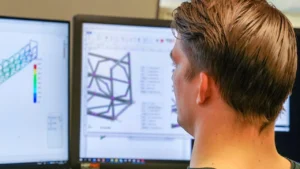
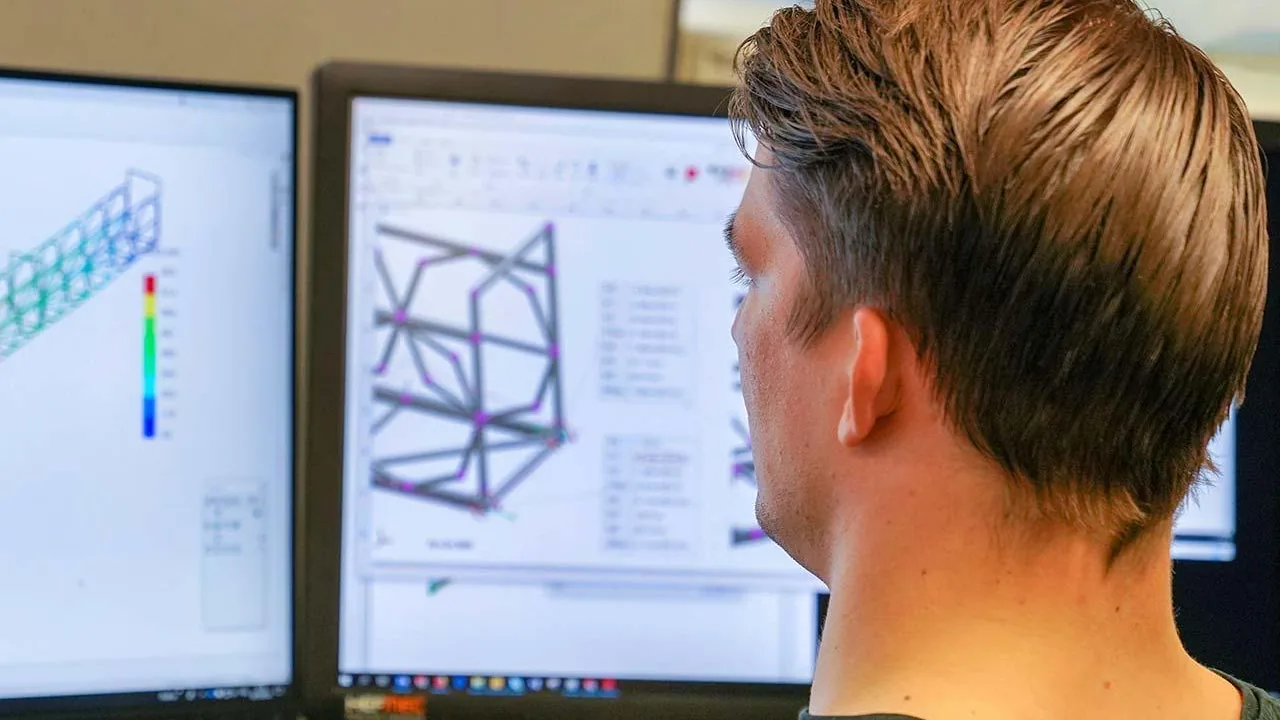
- structural analysis: whether hand calculation is sufficient or FEM analysis is needed
- documentation: manufacturing and assembly drawings, parts lists and the technical documentation for CE marking
- change rounds: how many times the solution is changed during design.
The design software affects the price less than is often assumed. We design with the software used by the customer’s own product development, so that models transfer to the customer’s system without conversions.
How does input data affect the cost of design?
Clear input data is the customer’s most effective way to manage design costs. When the intended use, loads, space constraints, interfaces and applicable requirements are recorded before design starts, the designer can move straight to concepts. If information is missing, it has to be clarified during design, and that shows in the workload.
For larger procurements, the input data should be compiled into a user requirement specification (URS). For a small task, a sketch, dimensions and a description of what the equipment must do are often enough.
Late changes are the biggest single cost risk in design. At the concept stage a change means correcting a sketch, but after detail design it can mean updating the model, the calculations and every drawing.
Daily rate or fixed price?
For short tasks such as pre-design and concept design, structural checks and CE documentation, we mostly use a daily rate: the task is defined together, and the customer knows in advance how many days are reserved for it. For larger entities, we typically provide a quotation based on the input data and an estimate of the workload.
Both approaches work best when the scope is clearly defined. If the input data becomes more precise only during the project, the work should be divided into phases: first definition and concept, then detail design. This way the customer decides on the next phase knowing what the solution is going to cost.
What does the price of design not tell you?
The price of design is only part of the total cost of equipment. Manufacturing, procurement, installation and commissioning typically cost many times more than design, and design determines much of these costs.
- A structure that is difficult to weld or machine costs extra in every part that is manufactured.
- Tolerances that are too tight raise manufacturing costs without any functional benefit.
- If maintenance has not been considered, every maintenance shutdown is longer for the entire service life of the equipment.
That is why design quotations should also be compared on what they include: whether manufacturability, structural analysis and documentation are included, and who is responsible for the solution working.
How can design costs be managed?
- Record the requirements before design starts and name the person who approves the concept.
- Make the big decisions at the concept stage, while changes are still inexpensive.
- Favour standard components and existing solutions when they meet the requirements.
- Involve manufacturing already at the design stage. As we also design and manufacture ourselves, we consider manufacturability from the very start.
- Divide a large project into phases so that each phase is decided on the basis of information.
We explain the role of structural analysis in design in the article What is structural analysis? and the phases of a design project in the article What is machine design, and how does a project progress?
Do you have any questions?
We are happy to assess what your design task requires. You can find more information on our mechanical design service page, or contact our service manager directly:
Mika Julin, Service Manager, Project and Expert Services, tel. +358 40 708 4567, mika.julin@hefmec.com