
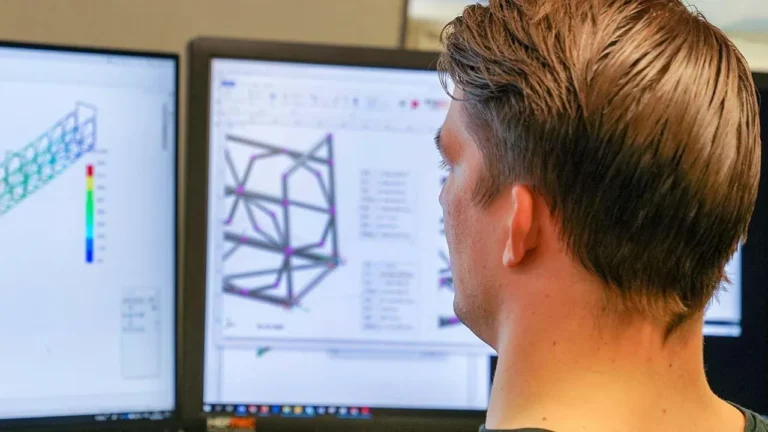
What is machine design, and how does a project progress?
Machine design takes a project from the initial need for a machine to production-ready drawings. See how the project progresses step by step and when it makes sense to outsource the design.
Markings and Color Codes on Lifting Accessories: A Guide to Safe Use
The markings and color codes on lifting accessories indicate load capacity, usage restrictions, and inspection status. The CE marking, load markings, and color codes ensure safe and legally compliant use—correct interpretation helps prevent workplace accidents.

What does WPS mean in welding—and how does it relate to lifting accessories?
A WPS, or welding procedure specification, defines how a specific welded joint is to be fabricated. In safety-critical structures, such as lifting accessories, an approved welding procedure specification is an essential part of controlled and traceable manufacturing. Learn what WPS, pWPS, and WPQR mean.

Why choose an adjustable lifting beam for production lifting?
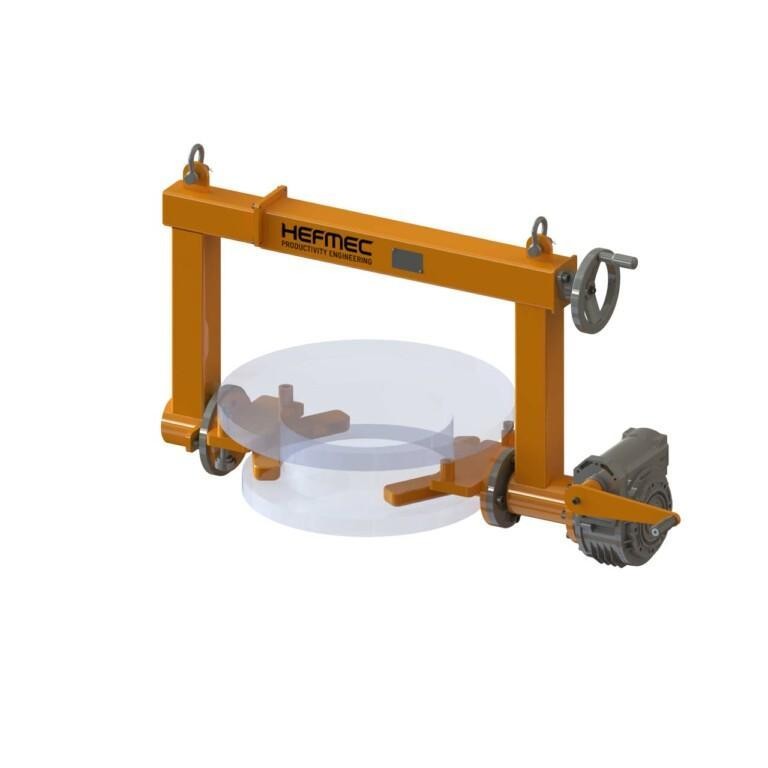
The adjustable lifting beam is an industrial lifting solution that allows the lifting points to be moved to different points along the length of the beam. This flexibility makes it an excellent choice for production environments where pieces of different sizes and shapes are handled. Compared to fixed lifting beams, the adjustable design improves work safety, speeds up production processes and significantly reduces the number of lifting tools required. In modern industrial production, the efficiency of lifting systems has a direct impact on the performance of the entire production line. Adjustable lifting beams have emerged as a key solution as companies seek flexibility and cost-effectiveness in their lifting operations. A correctly selected lifting system not only speeds up production, but also improves safety at work and reduces the risk of accidents at work. Production lifting is often a bottleneck in material handling. Traditional fixed lifting solutions limit operations, while an adjustable lifting beam adapts to different lifting situations. This flexibility is […]

How do you ensure the compatibility of the lifting solution with the production line?
Ensuring the compatibility of the lifting solution with the production line requires a systematic approach that takes into account technical requirements, physical constraints and control system integration. The process starts with a thorough needs assessment and definition of technical specifications, through design and implementation to commissioning and ongoing optimisation. Lifting solutions form the backbone of modern production, enabling efficient transfer and handling of materials at different stages of the production process. The compatibility of the lifting solution with the production line is a critical factor that directly affects production flow, personnel safety and overall costs. Lack of compatibility can lead to significant production losses, additional personnel costs and, in the worst case, incidents. A well-designed and integrated lifting solution, on the other hand, improves production lead times, reduces the need for manual labour and minimises the risk of accidents. The main areas of compatibility cover lifting capacity and load […]
How does the adjustable lifting beam support the handling of different weight categories?
An adjustable lifting beam is an industrial lifting device that allows the lifting points to be moved to different points along the length of the beam. This feature makes it particularly suitable for handling pieces of different sizes and weights on the same lifting device. This adjustability significantly improves production flexibility and reduces the number of lifting devices required, as one beam can be used for several different lifting tasks. An adjustable lifting beam is a lifting device in which the lifting points can be moved lengthwise according to the centre of gravity of the piece to be lifted. This allows safe and balanced lifting of objects of different sizes without the need for separate lifting equipment. The basic construction of the lifting beam consists of a strong steel beam with integrated sliding or lockable lifting points. The adjustment mechanisms can be manual or automatic depending on the requirements of the application. The beam is typically marked with a graduated scale to facilitate accurate positioning of the lifting points. Hefmec […]
What are the most common lifting aids in production?
The most common lifting equipment used in industrial production includes cranes, grabs, lifting beams, lifting magnets and special cranes. These lifting aids in production are essential for material handling, ensuring safety at work and improving production efficiency. The choice of the right lifting accessory depends on the weight of the load, its shape, the lifting height and the operating environment. Lifting equipment is the backbone of production, enabling heavy and awkwardly shaped objects to be moved safely. Without proper industrial lifting equipment, production processes would be significantly slowed down and occupational safety risks would increase considerably. The importance of lifting equipment is particularly highlighted in modern production, where increasingly large and complex pieces are handled. Well-designed lifting solutions reduce manual work, speed up material flows and minimise bottlenecks in production. At the same time, they protect workers from stress injuries and accidents. From a productivity perspective, correctly selected lifting equipment reduces handling times and enables larger batches to be […]
Which lifting beam is suitable for low spaces while maintaining the lifting height?
The low profile lifting beam is a low profile lifting device designed to maximise the available lifting height in limited spaces. These solutions combine a compact design, optimised hook geometry and innovative beam profiles that allow efficient lifting operations without compromising safety or lifting capacity. In industrial lifting solutions, this means in practice that we can use almost all available space for lifting operations. The low profile lifting beam is a specially designed lifting solution for spaces where ceiling structures or other physical obstacles limit the available height. These lifting beams differ from conventional lifting solutions by their significantly lower structural height, which allows them to be used in spaces where conventional lifting equipment cannot operate. The low profile design of the lifting beams uses optimised steel profiles and compact lifting spindles. The beam frame is […]
Which lifting capacity (1-200 t) of the lifting beam is suitable for different production levels?
The lifting capacity of the lifting beam is selected according to the production level: light assembly production requires a capacity of 1-10 tonnes, medium heavy industry requires lifting beams of 10-50 tonnes, and heavy industry uses lifting equipment of 50-200 tonnes. Choosing the right capacity ensures safe and efficient material handling in production. The importance of lifting beams in industrial production is crucial to ensure the safety and efficiency of production lifting equipment. Choosing the right lifting capacity has a direct impact on production flow, occupational safety and cost-effectiveness. The process of selecting a crane beam starts with a survey of production needs. Key issues include the weights of the loads to be lifted, the frequency of lifting in daily production and the space available. Oversizing the lifting capacity will lead to unnecessary costs, while undersizing will jeopardize occupational safety. Industrial lifting beams are always designed according to the application. Modern lifting solutions include adjustable lifting points that allow different shaped pieces to be lifted […]