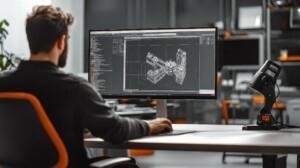
How does mechanical design affect the life cycle of a product?

The role of mechanical design in the product life cycle

Mechanical design is a critical part of the product life cycle, as it has a significant impact on the durability and performance of the product. Decisions made at the design stage determine the manufacturability, operating costs and recyclability of the product. Well-designed mechanics can extend the life of a product and improve its reliability, reducing the need for maintenance and repair.

The product life cycle starts with the design phase, where mechanical design lays the foundation for the structure and functionality of the product. During the design phase, materials and components are selected that contribute to the product’s durability and environmental impact. In the production phase, mechanical design ensures that the product is cost-effective to manufacture and meets all quality requirements.

During use, the mechanical design influences how easily and safely the product can be used. Ergonomic and intuitive design improves the user experience, which can extend the life of the product. Finally, in the recycling phase, mechanical design can facilitate the separation and reuse of materials, thus contributing to sustainable development.

The role of mechanical design in product development

Mechanical design is a key element in the product development process, as it determines the structure and functionality of the product. The design can be used to improve the user-friendliness and functionality of the product, which is important to remain competitive in the market. Well-designed mechanics can increase the value and attractiveness of a product in the eyes of consumers.

The design process can also shorten the time to market, which is important in a fast-changing market. Our agile working methods and open culture help us to deliver solutions quickly and efficiently. This allows us to talk in months while others talk in days.

For example, when we design vehicle parts, we use modern design software such as SolidWorks and CATIA to optimise the process and ensure that the product meets all technical requirements. This careful mechanical design ensures that our products are technically and economically correct.

Optimising production processes through mechanical design

Mechanical design can significantly improve the efficiency and optimisation of production processes. The decisions made during the design process have a direct impact on production efficiency and product quality. A well-designed production process reduces material wastage and shortens manufacturing times, which in turn reduces costs.

For example, when designing the welding jig for the plate parts of a vehicle battery, we take into account the requirements of the manufacturing process to ensure the smoothest possible production. This means that mechanical design can reduce unnecessary steps and improve production line flexibility.

In industrial production, it is important that design supports the whole production chain. This ensures that products are manufactured on time and within budget, improving the profitability of the entire business. Mechanical design allows us to create solutions that meet both current and future production needs.

Hefmec offers high quality mechanical design services covering the entire product life cycle. Our aim is that the customer feels confident when we take on a project. Read more about our services.

How can a mechanical designer help you solve problems?

The role of the mechanical designer in problem solving

Mechanical designers are key problem solvers in complex industrial projects. His/her starting point is to identify and analyse problems in depth, which requires not only technical skills but also the ability to understand the customer’s needs and objectives. Problem solving often starts with careful data collection and root cause analysis. This step is critical, as a misunderstood problem can easily lead to the wrong solutions.

Once the core of the problem is identified, the mechanical designer uses his technical expertise to develop innovative solutions. This often involves the use of different design tools and software, such as CAD. During the design process, the mechanical designer works closely with other experts and stakeholders, ensuring that all perspectives are taken into account. This collaboration is an essential part of the process, ensuring that the solution developed is both technically and economically optimal.

How does mechanical design benefit businesses?

Mechanical design can offer significant benefits to companies seeking to improve productivity, efficiency and innovation. The engineering solutions developed by a mechanical designer not only solve current problems, but also help anticipate future challenges. This proactive approach can bring significant cost savings and improve competitiveness.

Companies that invest in high-quality mechanical design often see improvements in production efficiency and quality. For example, well-designed mechanical engineering projects can reduce downtime and increase production line flexibility. In addition, the ability of mechanical designers to innovate can open up new markets and business opportunities, which is particularly important in a global economy.

Typical tools and techniques

Mechanical design uses a wide range of tools and techniques to solve complex problems. CAD software such as SolidWorks, Inventor and CATIA are key tools that allow designers to create accurate and detailed models. These software tools also allow simulations and analyses to be carried out to help predict how a designed device or system will perform under real-world conditions.

In addition to simulations, mechanical designers use prototyping and testing methods to ensure that solutions work in practice. Prototypes provide an opportunity to test and fine-tune designs before large-scale deployment, which can reduce risk and improve the quality of the final product. In addition, expertise in materials engineering and strength calculations is often needed to select the right materials and ensure the durability of structures.

Hefmec’s mechanical design services are a key element in the success of many companies. We are committed to providing our customers with innovative and effective solutions that not only solve current problems, but also help anticipate and meet future challenges. Learn more about our services and contact us at Hefmec Mechanical Design.

Is a mechanical designer necessary for a small business?

What is the role of a mechanical designer in a small business?

Many small businesses face challenges in optimising product development and manufacturing processes. This is where a mechanical designer steps in. Mechanical designers play a key role in designing, developing and improving new products. Their expertise helps ensure that products not only meet customer needs, but also exceed their expectations.

At Hefmec, we specialise in solving problems related to machinery and production technology in different industries. Our agile working methods and open culture enable us to provide technically and economically sound solutions that will continue to improve productivity in the future. For small businesses, this means that a mechanical engineer can help achieve significant improvements in product quality and manufacturing process efficiency.

When does a small business need a mechanical designer?

The needs of a small business for a mechanical designer can vary greatly. Often the need arises when a company expands its product development or starts new projects. For example, if a company wants to develop a new product or improve the performance of an existing product, a mechanical designer can provide valuable expertise and perspective.

Hefmec experts are used to working on complex projects, such as designing special tools for a vehicle parts assembly cell or developing a valve test press. In such situations, hiring a mechanical engineer can be justified, as they can provide solutions that are both innovative and cost-effective.

What are the benefits of a mechanical designer for small business growth?

A mechanical engineer can be an important factor in the growth of a company. Quality products, efficient production processes and innovative solutions can all lead to improved customer satisfaction and competitiveness. Mechanical designers help small businesses achieve these goals by providing technical knowledge and practical solutions.

For example, Hefmec has succeeded in improving the quality of its customers’ products and reducing costs with its fast and efficient solutions. Among other things, we have designed motor and gearbox lifting devices for a wind turbine and brackets for a wind turbine service room. Through these projects, we have helped our customers achieve their long-term growth objectives.

Hefmec is committed to providing high-quality mechanical design services that help small businesses grow and succeed. Read more about our services.

What testing steps are involved in mechanical design?

What are the testing steps in mechanical design?

Mechanical design is a multi-stage process in which testing plays a key role. The first stage is analysis, where the design team reviews the customer’s needs and defines the design objectives. During this phase, we identify problems and opportunities, laying the foundation for the entire design process.

Next, we move on to simulation, where we use advanced software to model the performance of our design solutions. Simulation allows us to predict how the designed mechanism will behave in real-world conditions and make the necessary changes before actual prototyping.

Prototype testing is the next key step. In this phase, we produce physical prototypes that are carefully tested in real-life situations. Prototype testing provides valuable information on the performance of the design and helps identify potential areas for improvement.

The final stage is quality assurance, where we ensure that the product meets all the quality requirements. Our quality assurance process is thorough and ensures that the final product is both reliable and durable for our customers.

Why is testing important in mechanical design?

In mechanical design, testing is a critical part of the process as it minimises risk and improves product reliability. Without careful testing, the design process will be incomplete, which can lead to costly errors in the production phase. Testing allows us to ensure that the product works as designed and meets customer expectations.

Testing also helps to manage costs. By identifying and fixing potential problems at the design stage, we can avoid costly changes at a later stage. This makes the whole design process more efficient and cost-effective.

In addition, testing has a major impact on the success of the design and the product’s market entry. A well-tested product creates customer confidence and improves market position. Hefmec’s testing processes are designed to support the customer’s business objectives and contribute to their competitiveness.

How does simulation support the testing phases of mechanical design?

Simulation is an essential part of the testing phase of mechanical design, as it allows for the evaluation of designs before physical prototypes are produced. Simulation tools allow us to model the behaviour of designed components and systems under different loading and environmental conditions.

The advantage of simulation is that it provides a quick and cost-effective way to identify potential problems in the design. This reduces the need to produce multiple physical prototypes, saving both time and resources.

The simulation tools also allow you to test different scenarios, helping you to optimise your design solutions technically and economically. This makes the whole design process more agile and flexible, which is one of Hefmec’s competitive advantages.

What are the challenges of the testing phases?

There are many challenges associated with the testing phases of mechanical design. One of the most common is time pressure. Tight project schedules can put pressure on the thoroughness of the testing phases. However, it is important to allow sufficient time for testing to ensure product quality and functionality.

Budgetary constraints are another major challenge. Although testing can be expensive, it is essential for risk management. Budgetary constraints make it important to prioritise the most critical testing phases and use simulation to save resources.

Technical problems and unexpected challenges can also delay the testing process. To overcome these challenges, it is important to maintain an open and agile culture that enables rapid response and problem solving. Hefmec’s open and flexible way of working is designed to support effective problem solving and project management.

The testing stages of mechanical design are crucial to ensure product performance, quality and cost-effectiveness. Hefmec’s expert team is committed to providing customers with high-quality design solutions that are both technically advanced and economically sound. Take a closer look at our mechanical design services and let us help you achieve successful projects.

Why does your company need a mechanical designer?

What does a mechanical designer do?

The role of the mechanical designer is central to the company, with expertise covering a wide range of design processes and technical know-how. The mechanical engineer is responsible for the design and development of machinery and production engineering, which requires a deep understanding of material properties, mechanics, pneumatics and hydraulics. The design process starts with listening to the customer’s needs and problems in order to identify the root causes of the problem and develop an optimal solution.

Mechanical designers play a key role in the early stages of a project, defining the requirements and objectives of the project. They work closely with other engineers and production teams to develop technical solutions that improve production efficiency and reduce costs. Hefmec’s mechanical design services enable clients to undertake projects large and small, such as the design of robotic geogrippers or the development of industrial lifting equipment. This ensures that our customers can rely on projects progressing smoothly and efficiently.

How can a mechanical designer improve product quality?

The professionalism of the mechanical designer has a direct impact on the quality of the product. Quality engineering design ensures that products are durable, functional and safe. The mechanical designer uses his extensive knowledge of materials engineering and mechanics to maximise product performance and durability. For example, choosing the right materials and designing efficient joints can reduce the susceptibility to failure and extend the life of a product.

Hefmec’s customers have found that the equipment and systems designed for them perform excellently and meet high quality standards. Having a mechanical engineer involved from the start of the process ensures that the design solutions are tailored to the customer’s needs. This results in significant improvements in product quality, benefiting both the customer and the company in the long term.

The impact of the mechanical designer on cost-effectiveness

A mechanical designer can make a significant contribution to the cost-efficiency of a company by optimising design processes and reducing material waste. Optimising the design process means that production processes are designed to be efficient from the outset, reducing the need for errors and rework. This saves time and money.

Material and energy efficiency are also key areas where a mechanical designer can bring significant savings. For example, a correctly sized hydraulic system can reduce energy consumption and lower costs. Hefmec’s agile working methods and efficient design solutions ensure that our customers receive technically and economically right-sized solutions quickly and reliably.

Driving innovation through mechanical design

Mechanical designers are often key to developing innovations and creating new products. Innovative design solutions can open up new opportunities and markets, contributing to a company’s growth and competitiveness. Mechanical designers bring new ideas and perspectives that can lead to major technological breakthroughs.

Hefmec’s mechanical design services are renowned for their innovation and ability to develop solutions that improve productivity. Projects such as the development of fibre optic machines and variable speed drives are examples of projects where innovative design has played a key role. By integrating new technologies and approaches, mechanical designers can contribute to the company’s ability to innovate and ensure that our customers receive competitive products that meet future needs.

Hefmec offers comprehensive mechanical design services that help companies solve challenging technical problems and achieve high quality standards. Our expert team works quickly and responsibly, ensuring that our customers feel confident at every stage of their projects. Find out more about our services at Hefmec Mechanical Design Services.

Why do you need a mechanical designer for your project?

Mechanical Engineer

A mechanical engineer is an engineer who specialises in the technical design of machinery and equipment. Their work covers a wide range of design projects that require an in-depth understanding of mechanical principles. Mechanical designers are often responsible for project management, where they coordinate technical solutions to meet customer needs. This includes sustainability calculations, material selection and optimisation of production engineering solutions. They use modern design software such as SolidWorks or CATIA to create accurate and efficient solutions that meet the customer’s needs.

How does the mechanical designer contribute to the success of the project?

The mechanical designer plays a key role in the different phases of the project, from concept development to completion. Their expertise in technical design helps to identify and solve potential problems early on in the project, which can significantly reduce costs and save time. Mechanical designers analyse and optimise the performance of systems, improving production efficiency and reliability. For example, they can design automated systems that improve production line repeatability and reduce the need for manual labour. This brings long-term benefits to the customer, allowing them to increase production without significant additional costs.

When is the right time to involve a mechanical designer in a project?

It is advisable to involve the mechanical designer as early as possible in the project. Early involvement allows for a better understanding of the project objectives and challenges. The expertise of a mechanical engineer is particularly valuable at critical moments in the decision-making process, such as when selecting materials or evaluating technical solutions. Early involvement can also help anticipate and avoid potential problems, which can reduce the overall project duration and prevent additional costs later on. The involvement of a mechanical designer throughout the project ensures that the technical solutions are consistent and always meet the changing needs of the customer.

What are the benefits of outsourcing mechanical design?

Outsourcing offers a number of benefits, such as cost savings, specialised expertise and flexibility. Companies can focus on their core business while benefiting from the expertise and experience of an external team of specialists. Outsourcing can make economic sense as it reduces the need to hire and train in-house designers. By outsourcing, you get access to a team with extensive experience and up-to-date knowledge of the latest technologies and trends. This ensures that solutions are technically and financially right-sized to support your long-term business objectives. Hefmec offers mechanical design services that guarantee high quality and efficiency of projects. Find out more about our services.

Why choose Hefmec for your strength calculation?

What is a strength calculation?

Strength calculation is a key part of engineering services, focusing on ensuring the durability and safety of structures and components. This engineering analysis is vital in many industries such as mechanical engineering, energy and transport. Strength calculations ensure that structures can withstand the designed loads without excessive deformation or fracture, which is paramount for both safety and efficiency.

Without accurate strength calculations, structures may face unexpected damage or even collapse, causing incidents and economic losses. Strength calculations are therefore an essential part of product development and project design, enabling optimised and safe design. Hefmec specialises in providing accurate and reliable strength calculation services that meet the highest industry standards.

Hefmec’s expertise

Hefmec has more than a decade of experience in demanding strength calculation projects, making us the leading expert in the field in Finland. Our team consists of certified engineers with in-depth knowledge and experience in complex engineering analyses. We have carried out several major projects, such as strength calculations of load-bearing steel structures, design of lifting and swinging devices for ball valves and analysis of supports for wind turbine maintenance facilities.

Our engineers use state-of-the-art software and tools to achieve accurate and reliable results. We are constantly developing our skills and keeping up to date with the latest technological advances to provide our clients with the best possible service. This allows us to offer a lifetime guarantee on many of our products, demonstrating our confidence in our solutions.

Cost-effectiveness and time savings

Hefmec understands that time and money are important resources for every customer. That’s why we offer cost-effective engineering services that save our customers time and money. We use engineering analyses that are carefully calibrated and economically sound, which means our clients get the best possible return on their investment.

Many companies talk about months, but we talk about days. This speed does not mean a reduction in quality, but is the result of our efficient processes and expert team. When Hefmec tackles a project, you can trust that the job will be done quickly and correctly. This time saving is a significant competitive advantage that helps our customers stay on time and on budget.

If you are interested in learning more about Hefmec’s strength calculation services and how we can help you with your projects, please visit our website: Hefmec Strength Calculation.

The role of mechanical design in the manufacturing industry.

What is the importance of mechanical design for the manufacturing industry?

Mechanical design is the backbone of the manufacturing industry, directly affecting the efficiency of production processes, product quality and innovation. Mechanical design allows us to optimise every step of the production chain, improving efficiency and reducing costs. This is particularly important in competitive markets where speed and efficiency are key. Mechanical design also plays an important role in the development of innovation. New technologies and design methods enable the manufacture of more sophisticated and complex products, giving companies a competitive advantage.

Product quality is improved when mechanical design is used effectively. This means that the design process takes into account all possible factors affecting the durability and performance of the product. Hefmec’s commitment to quality is reflected in the fact that we can offer a lifetime guarantee on many of our products, a testament to the excellence of our design and manufacturing. Our customers feel reassured when they know they have a project in our hands, and this confidence has been earned through years of experience and successful projects.

How is mechanical design integrated into the manufacturing process?

Mechanical design is a key part of the manufacturing process and is seamlessly integrated into the various production steps. The design process starts with listening to the customer and understanding the root cause of the problem. This stage is critical, as it defines the design guidelines and ensures that the end result meets the customer’s needs. The design phase takes into account all factors related to production, such as material choices, manufacturing methods and production capacity, enabling efficient and economical production.

Our agile working methods and open culture mean that our solutions are quickly available. While others talk about months, we talk about days. This speed is achieved through close cooperation between different departments and constant communication with the customer. Mechanical design is therefore an integral part of the overall production planning, and can achieve significant improvements in both product quality and manufacturing process efficiency.

Learn more about our mechanical design services and how we can help you achieve your goals in manufacturing: Hefmec Mechanical Design Services.

Can a strength calculation prevent project errors?

What is strength calculation and why is it important?

Strength calculation refers to an engineering analysis used to assess the durability and reliability of structures under different loading conditions. This process is a key part of structural design and engineering to ensure that structures can safely and effectively withstand the demands placed on them. Hefmec experts use strength calculations in complex mechanical and manufacturing engineering projects where accuracy and reliability are key.

The importance of strength calculations is particularly highlighted when building new infrastructures or developing production equipment. It can not only optimise the use of materials, but also minimise project errors that could lead to costly redesigns or even incidents. Strength calculations provide the customer with the certainty of knowing that a structure will withstand the designed loads throughout its life cycle.

How is the strength calculation done in practice?

In practice, strength calculations are carried out using various technologies and software, such as FEM (Finite Element Method) analysis. This method allows the structure to be broken down into small components, which can be used to accurately estimate the effect of loads on the structure as a whole. Our engineers at Hefmec make extensive use of this calculation method in our customer projects.

We use our extensive expertise to implement both linear and non-linear computational models, enabling the analysis of complex structures under real operating conditions. This allows us to anticipate and prevent potential errors at the design stage. This foresight is a key part of our project management process and helps our customers to achieve technically and economically optimal solutions quickly.

What kind of errors can be prevented by strength calculation?

Strength calculations can prevent a wide range of structural errors, such as underestimation of load capacity, material fatigue or suboptimal load distribution. Structural weaknesses can lead to serious safety risks, which can be avoided by accurate and careful strength calculations.

Hefmec’s experts specialise in identifying and correcting these weaknesses early on in the project, significantly reducing the need for redesign and project delays. Strength calculations also allow us to develop solutions that can withstand future demands and improve production efficiency in the long term.

The role of strength of schedule in project management

The integration of strength calculation into project management is an integral part of Hefmec’s approach. This approach ensures that projects are delivered on time and on budget, while ensuring the safety and reliability of structures. Our agile working methods and open culture allow us to respond quickly to our clients’ changing needs.

When strength calculation is part of the project management process, it helps to manage resources efficiently and reduce risks. Our clients can be confident that every stage of a project is planned and executed with precision, reducing the chance of errors and speeding up project completion.

Hefmec’s strength calculation services are a key factor in many successful projects. Learn more about our services and how we can help you ensure the success of your project .

Why invest in quality mechanical design?

High quality mechanical design

Mechanical design is a key part of product development, combining technical expertise with creative problem-solving skills. It is used to develop products that meet the needs of different industrial sectors. Quality mechanical design means that every detail, material choice and technical solution is carefully considered to ensure that the final product performs reliably and efficiently throughout its life cycle.

Hefmec’s design team consists of experienced engineers who use their extensive knowledge and modern tools such as SolidWorks, Inventor and CATIA to create sustainable and innovative solutions. This approach ensures that our solutions are technically advanced and economically viable. Through mechanical design, we ensure that products not only meet current requirements, but also exceed customer expectations in the future.

How does quality design affect the life cycle of a product?

High quality mechanical design is key to managing the life cycle of a product. It directly affects the durability, maintainability and usability of the product. By taking into account all possible loads and operating conditions during the design phase, you can ensure that your product will last for a long time without major repairs or upgrades.

For example, strength calculation and accurate material selection are critical components that affect the durability of the product. Hefmec’s experts know the properties of different materials and know how to select just the right materials for each product. This not only improves product performance, but also facilitates maintenance and extends product life. In addition, when products are easy to maintain, customers can save considerable amounts in lifecycle costs.

What savings can be made by investing in planning?

Investing in quality mechanical design can bring significant savings in the long run. When a product is designed correctly from the outset, it significantly reduces production costs and minimises the need for errors or rework. This means that production can proceed smoothly without costly interruptions or delays.

Hefmec’s agile working methods and open culture enable a fast response to customer needs. While other companies may take weeks or months to develop solutions, we can deliver results in days. This speed not only reduces production costs, but also makes your company more competitive in the market.

In addition, correctly sized and designed solutions help to improve production efficiency and productivity. This not only saves money, but also improves business profitability and enables better resource management.

Why choose Hefmec as your partner?

Hefmec offers its customers unique expertise and experience in mechanical design. Our team consists of both young and experienced professionals who combine theoretical knowledge with practical experience. This combination ensures that our customers always receive high quality and innovative solutions tailored to their individual needs.

Our customers are the most satisfied in the industry – and for good reason. We listen carefully and seek to understand the root causes of their problems. This customer-centric approach enables us to provide technically and economically right-sized solutions that will continue to improve productivity in the future. In addition, because we always take full responsibility for our work, we can offer a lifetime guarantee on many of our products, which increases our customers’ confidence and peace of mind.

If you are interested in learning more about how Hefmec can help you with your mechanical design projects. Contact one of our experts. We are ready to help you develop sustainable, efficient and innovative solutions that meet your business needs. Find out more about our services.