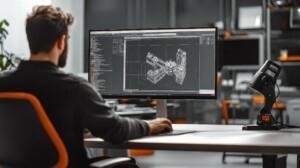
How does mechanical design contribute to business growth?

The impact of mechanical design on business efficiency

Mechanical design is an essential part of business processes in many industries. If implemented effectively, it can significantly improve a company’s performance and cost-efficiency. By optimising processes, companies can save time and money, which in turn increases their competitiveness in the market. Mechanical design allows us to improve product quality, leading to increased customer satisfaction and reduced product returns. All this increases the potential for business growth.

At Hefmec, we specialise in finding the solutions that make our customers’ processes more efficient. We use our agile working methods and open culture to respond quickly and accurately to our customers’ needs. While others talk in months, we talk in days. This speed and efficiency are key to helping our customers achieve their business goals.

Innovation and competitive advantage through mechanical design

Innovation is the engine that drives business growth, and mechanical design is often at the heart of this innovation. Mechanical design allows us to develop new products and improve existing solutions, which can provide a significant competitive advantage in the market. Innovative products can open up new markets and expand the customer base, which is critical to a company’s growth.

At Hefmec, we are constantly evolving and using the latest technologies, such as 3D modelling and simulation software, to create innovative solutions. This not only improves the quality of our products, but also shortens development cycles and reduces costs. In this way, we ensure that our customers gain a competitive advantage in the market.

The role of technology in mechanical design

Technology is a key part of today’s mechanical design. Advanced design software and simulation tools enable more accurate and efficient design processes. This not only improves the quality of the design, but also enables the development of more complex and innovative solutions.

The Hefmec design team uses modern design software such as SolidWorks, Inventor, Creo and CATIA, as well as other technologies to help us deliver the most challenging projects. This technology allows us to simulate and test designed solutions before they are implemented, reducing the chance of errors and improving product reliability. This leads directly to business growth, with products that are of high quality and meet customer expectations.

If your company needs expert mechanical design, Hefmec is a reliable partner who takes responsibility for every stage of the project. Find out more about our services and contact us at Hefmec Mechanical Design Services.

Step by step URS process: how to document user requirements?

How are user requirements documented?

Documenting user requirements is a key part of the User Requirement Specification (URS) process, which ensures that the end result of the project meets the customer’s needs and expectations. The URS process starts with the collection of user requirements and ends with their detailed documentation. This process is critical as it lays the foundation for the design and implementation of the project. In this article, we will go through the steps of the URS process and provide practical tips for effective documentation.

Why is URS documentation important?

URS documentation is important because it acts as a guideline for the project and ensures that all parties are on the same page. A well-drafted URS document reduces misunderstandings and helps avoid costly changes later in the project. It provides a clear framework for monitoring and evaluating project progress.

Without accurate URS documentation, project objectives can remain unclear, which can lead to schedule delays and budget overruns. Documentation also helps ensure that all technical and functional requirements are met, which is particularly important in complex projects such as Hefmec’s mechanical engineering design and delivery projects.

How to start the URS process?

The URS process starts with the collection of user requirements. This phase involves working closely with the customer to understand their needs and expectations. It is important that all stakeholders are involved in this phase to ensure that all perspectives are taken into account.

Next, the requirements are analysed and prioritised. This step helps to identify critical requirements that need to be taken into account in the project design. After the analysis, the requirements are formulated into clear and unambiguous sentences that can be included in the URS document.

What are the key elements of a URS document?

The URS document consists of several key elements that ensure that all the necessary information is documented. These elements include:

  • Introduction: overview of the objectives and scope of the project.
  • User requirements: a detailed list of all functional and non-functional requirements.
  • Technical requirements: the technological and technical requirements that the project must meet.
  • Approval criteria: criteria against which the final outcome of the project will be assessed and approved.
  • Attachments: any additional information, such as graphs, tables and other documents.

How to ensure the accuracy and efficiency of documentation?

Accuracy and efficiency are key to URS documentation. It is important to use clear and unambiguous language so that all parties understand the requirements in the same way. The document should be sufficiently detailed, but at the same time easy to read and understand.

To ensure efficiency, it is recommended to use standardised templates and tools to facilitate the documentation process. In addition, regular reviews and updates help to keep the document up-to-date and relevant. Companies like Hefmec can take advantage of agile working methods that allow them to react quickly to changes and improve the quality of their documentation.

When will the URS document be updated and why?

The URS document should be updated whenever the project requirements change. This can happen, for example, when the client’s needs change or when technology evolves. Updates are important to keep the document up-to-date and reflect the current state of the project.

An updated URS document will help ensure that all parties are aware of the changes and that the project’s objectives remain clear. This reduces the risk of the project going off track and helps ensure that the end result meets the client’s expectations. Companies such as Hefmec, which invest in an open culture, can benefit from regular updates that improve project management and customer satisfaction.

For more information on defining and managing requirements, visit Hefmec’s URS services.

What is mechanical design used for in industry?

Mechanical design

Mechanical engineering is a diverse and important part of industry, focusing on the design, development and optimisation of machinery and equipment. This sector ensures that industrial machinery and equipment operate efficiently, safely and reliably. Mechanical design aims to create solutions that improve production flow and reduce potential disruptions.

In industry, mechanical design plays a key role in enabling the introduction of new technologies and innovations. It allows you to develop existing systems to better meet today’s requirements. Mechanical design is therefore an important part of the development of production engineering and mechanical design.

Mechanical designers work with a wide range of challenges every day. They analyse production processes, design new components and optimise existing systems. This work requires a deep understanding of materials, forces and motion and the ability to apply these principles to practical solutions.

Key applications in industry

Mechanical design is widely used in a variety of industries, including automotive, aerospace and manufacturing. In the automotive industry, mechanical designers work on the development of automotive components such as engines, gearboxes and suspensions. Their job is to ensure that cars are not only high-performance, but also safe and energy-efficient.

In the aerospace industry, mechanical design is very important for the design of aircraft and other airborne systems. Safety and efficiency are particularly important here, as even small errors can have serious consequences. Mechanical engineers develop complex systems that improve aircraft fuel efficiency and reduce emissions.

In the manufacturing industry, mechanical design is used to optimise production lines and machinery. The aim is to improve production efficiency, reduce downtime and improve product quality. Mechanical design is also widely used in robotics, where automation systems and robotic arms are carefully designed to improve the efficiency of production processes.

In the energy sector, mechanical design helps you develop renewable energy solutions. Wind turbine rotors, solar panel monitoring systems and hydroelectric turbines all require precise mechanical design to work optimally. These applications contribute to sustainable development and reduce dependence on fossil fuels.

In the pharmaceutical industry, mechanical design is essential in the development of medical devices. Pacemakers, prostheses and imaging devices require very precise design and manufacturing. Safety and reliability are of paramount importance in this sector.

The impact of mechanical design on industrial innovation

Mechanical design is a key driver of industrial innovation. It allows you to develop new products and processes that meet the needs of a changing world. For example, mechanical design can help meet the challenges of climate change by developing energy-efficient and low-emission technologies.

Innovation requires a deep understanding of both technical design and industrial needs. Mechanical engineers often act as a bridge between these two worlds, creating solutions that are both technically and economically sustainable. In doing so, they also contribute to the competitiveness of companies by providing their customers with innovative and cost-effective solutions.

Industrial innovation is often multidisciplinary, with mechanical engineers collaborating with other engineering disciplines, such as electrical and automation engineers. This collaboration enables the development of holistic solutions that improve productivity and sustainability.

Digitalisation is significantly changing mechanical design. CAD software, simulation tools and 3D printing are speeding up the design process and enabling the creation of more complex structures. These technologies help you test ideas virtually before physical prototyping, saving time and money.

Artificial intelligence and machine learning are bringing new possibilities to mechanical design. These technologies can optimise design by analysing large amounts of data and predicting the behaviour of components under different conditions. This will help you create more efficient and sustainable solutions.

Sustainability is now an important part of mechanical design. Designers consider the environmental impact of products throughout their life cycle, from material selection to recyclability. This approach helps companies reduce their carbon footprint and meet growing consumer demands for environmental protection.

Hefmec is committed to providing its customers with cutting-edge mechanical design services that meet both current and future challenges. We have years of experience in demanding production development projects and mechanical engineering design and supply projects. Our agile working methods and open culture ensure that our solutions are technically and economically right-sized. To learn more about our services, please visit our website: Hefmec Mechanical Design Services.

How does URS reduce project risks and improve the end result?

What is URS and how does it relate to project management?

The URS, or User Requirement Specification, is a document that defines the user’s requirements and expectations for the end result of a project. It serves as the basis for project management, ensuring that all parties understand the project objectives and requirements in the same way. The URS helps to avoid misunderstandings and ensure that the project outcome meets the customer’s needs.

In project management, URS is a key tool that helps define the scope, schedule and budget of a project. It also acts as a reference framework as the project progresses, ensuring that all actions and decisions support the original objectives. This makes the URS an essential part of effective project management.

What are the usual risks involved in projects?

Projects often face a wide range of risks that can affect the schedule, budget and outcome. Common project risks include:

  • Schedule delays: resource constraints or unexpected problems can delay the completion of a project.
  • Budget overruns: underruns on initial cost estimates or unexpected additional costs can lead to budget overruns.
  • Quality degradation: if the project requirements are not clearly defined, the end result may not meet expectations.
  • Communication problems: misunderstandings and poor communication can lead to errors and inefficiency.

How does URS help identify and manage risks?

URS is a powerful tool for managing project risks, as it helps to identify potential problem areas at an early stage of the project. By clearly defining user requirements, it is easier to anticipate where risks may arise and how to manage them.

The URS also helps to ensure that all parties involved in the project are aware of the potential risks and their implications. This allows for better preparation and development of risk management strategies. In addition, the URS provides a reference framework to monitor the progress of the project and to ensure that all actions support the original objectives.

How can URS improve the outcome of a project?

URS improves the outcome of a project in many ways. First, it ensures that the project objectives and requirements are clearly defined and understood by all parties. This reduces misunderstandings and ensures that the end result of the project meets the client’s expectations.

Secondly, URS helps manage project risks, reducing the likelihood of delays and budget overruns. When risks are identified and managed effectively, the final project outcome is more likely to be of high quality and on time.

Finally, the URS will serve as a continuous reference framework as the project progresses, allowing for better monitoring and management. This ensures that all project activities support the original objectives and that the final result is technically and financially correct.

What other methods can be used to support URS?

While URS is a key tool in project management, it can also be supported by other methods and tools. For example, risk analysis and risk management are important elements in the success of a project. These can be used to identify and assess risks and develop strategies to manage them.

Project management software and tools, such as Gantt charts and project management systems, can also support the use of URS. They help to monitor project progress and ensure that all actions are aligned with the URS.

Finally, regular communication and cooperation between project partners is essential. This will ensure that everyone is aware of the progress of the project and any changes, which will support the effective use of the URS and the success of the project.

For more information on defining and managing requirements, visit Hefmec’s URS services.

Why external project and expert services?

What are the benefits of external expertise for your organisation?

The use of external expertise can bring significant benefits to an organisation, especially when focusing on cost-effectiveness, efficiency and specialised skills. Outsourcing is a strategic choice that frees up an organisation’s resources to focus on its core business, while external experts manage complex and time-consuming projects. This often leads to cost savings, as specialist services can provide services on a scalable and on-demand basis, without the fixed costs of maintaining an in-house team.

Specialised knowledge is another major advantage. Companies like Hefmec offer expert services with in-depth knowledge of the challenges of mechanical and production engineering. This means that clients have access to top industry experts with up-to-date knowledge and experience, which improves the quality and outcome of projects. In addition, agile working methods and an open culture accelerate the delivery of solutions, which is vital in a fast-changing business environment.

How can external project and expert services improve project management?

External project and expert services can significantly improve project management. One of the key benefits is risk reduction. Organisations like Hefmec bring extensive experience in project management, which helps to anticipate and manage risks effectively. Our team is used to working on a wide range of investment projects, ensuring that projects are delivered on time and on budget.

Improved project management is also reflected in how well a project stays on schedule. While others talk about months, we talk about days. Hefmec’s project managers and engineers have the ability to react quickly to changing situations, ensuring that the project schedule does not slip and that any problems are solved immediately. This is possible because it all starts with listening to the client and understanding the root cause of the problem, ensuring that solutions are technically and economically right-sized.

When is the right time to consider an external service?

The right time to consider using external services arises in a number of situations. One of the most common is a lack of resources. When an organisation does not have enough staff or time to handle a particular project, outsourcing may be the answer. Another situation is the need for specific expertise. If a project requires specialist skills that the organisation does not have in-house, specialist services can fill this gap.

Hefmec can provide specialised project services such as mechanical design, production development and validation, exactly when you need them. This not only facilitates project management, but also improves project outcomes and ensures that projects are completed on time and on budget. In addition, when an organisation faces new challenges or opportunities, an external expert service can provide fresh perspectives and innovative solutions that can be critical to business growth and development.

Hefmec’s project and professional services provide our customers with the certainty and accountability they need to succeed. We have the ability to solve the most demanding industrial production problems and offer a lifetime guarantee on many of our products, demonstrating our commitment to quality and customer satisfaction. For more information about our services, click here.

When does it make sense to outsource mechanical design?

What are the benefits of outsourcing?

Outsourcing mechanical design can bring significant benefits to a company. One of the most important is cost savings. When a company decides to outsource mechanical design, it can avoid making large investments in developing its own resources, such as hiring staff or acquiring the latest technology. Specialist companies like Hefmec can provide these services at no extra cost, making outsourcing a financially sound choice for many companies.

Efficiency is another important benefit of outsourcing. Hefmec’s experts use agile working methods and modern design software such as SolidWorks and CATIA, allowing for faster project implementation. When others talk about months, we talk about days. This means companies can speed up their product development processes and get products to market earlier, improving competitiveness.

In addition, outsourcing brings expertise to the company that may not be available in-house. Hefmec’s design team consists of experienced engineers and graduate engineers who combine practical experience with a strong theoretical background. Our diverse knowledge of different technologies and industries ensures that our solutions are technically right-sized and will continue to improve productivity in the future.

How to choose the right outsourcing partner?

Choosing the right partner to outsource your mechanical design is crucial to the success of your project. Firstly, the experience and references of the partner are important evaluation criteria. Years of experience and previous successful projects are a sign of reliability and competence. Hefmec has extensive experience in various projects, such as the design of robot geogrippers and vehicle components.

Technical capability is another key factor. The partner must master the latest design software and technologies in order to provide efficient and up-to-date solutions. Hefmec uses software such as SolidWorks and Creo, which enables the implementation of complex design tasks.

Communication skills and an open culture are also important. It is important that the partner is willing to listen to the client’s needs and understand the root causes of the problem. Hefmec is committed to a customer-centric approach, which ensures that our customers receive solutions that are tailored to their needs.

How does outsourcing affect the company’s operations?

Outsourcing can change the day-to-day operations of a company in many ways. First, it can free up internal resources for other critical tasks, such as product development or marketing. This can improve the company’s overall efficiency and focus on strategically important areas.

In terms of organisational culture, outsourcing can bring new ways of working and innovative ways of thinking. Hefmec’s agile working methods and expert team can inspire the company’s own employees and promote learning and development. This can lead to improved collaboration and more open communication throughout the organisation.

From a resource management perspective, outsourcing can help a company adapt to rapidly changing market situations. External partners such as Hefmec can provide the flexibility to respond quickly to new challenges and opportunities. This can improve a company’s ability to adapt and succeed in a competitive environment.

Hefmec offers comprehensive mechanical design services to meet the most demanding industrial production problems. Our experienced designers combine practical experience with theory and use state-of-the-art design software, ensuring that all projects are completed with high quality and efficiency. Read more about our services.

What benefits do expert services bring to your company’s projects?

How do expert services improve project efficiency?

Expert services are key to improving the efficiency of business projects. When a company engages experts in a project, it brings solid experience and in-depth understanding of different industries. At Hefmec, we have the ability to solve even the most demanding industrial production problems, and our agile working methods enable projects to be completed quickly and efficiently. When others talk months, we talk days.

Our experts are used to working on a wide range of investment projects, which means they have the skills and knowledge to ensure a smooth project. They are familiar with industry best practice and can anticipate potential obstacles before they arise. This ensures that projects stay on time and on budget.

In addition, expert services offer flexibility. When unforeseen changes occur in a project, experts can adapt quickly and react efficiently. This reduces delays and improves the overall productivity of the project.

What are the economic benefits of professional services?

The use of expert services can bring significant economic benefits to business projects. Firstly, experts can help optimise the use of resources, thereby reducing costs. Hefmec’s experts can identify the critical points of a project and direct resources to where they are most needed.

Secondly, expert services can help avoid costly mistakes. When experts are involved in the planning and implementation of a project, they can anticipate and solve potential problems before they become major ones. This reduces the need for repairs and additional work, saving both time and money.

Finally, expert services can increase the financial viability of a project. Experts can develop technically and economically sound solutions that will improve productivity in the future. This means that the company will reap long-term benefits from the use of expert services.

How do professional services affect project risk management?

Risk management is an essential part of successful project management, and expert services can significantly improve this area. Experts identify the potential risks of a project and develop strategies to manage them. Hefmec’s experts are among the most experienced in the industry, and their expertise allows us to significantly reduce risks.

Experts can also improve the safety of your project. They have a deep understanding of industry regulations and standards, and ensure that all stages of the project meet these requirements. This reduces the risk of errors and accidents and ensures project success.

In addition, expert services can provide ongoing support during the project. This means that potential problems can be addressed quickly and efficiently, reducing their impact on the project.

How do expert services support innovation in business projects?

Innovation is a key factor that can differentiate a successful company from its competitors. Expert services can play a crucial role in bringing new perspectives and creative solutions to business projects. Hefmec’s experts bring a wealth of experience and in-depth expertise to the table, enabling the development of innovative solutions.

Experts can help companies see things from a new perspective and identify opportunities that would otherwise have been missed. They can also bring new technologies and methods that can improve the outcome of a project. This can lead to more efficient processes, higher quality and improved customer satisfaction.

Expert services can also act as a catalyst for product development projects. Experts can provide valuable insights into market needs and expectations, helping companies to develop products that meet demand and stand out from the competition.

Finally, we would like to highlight the project and expertise services offered by Hefmec. We have experience and expertise covering a wide range of industries. Our customers are satisfied with our services and trust us to bring projects to a successful conclusion. Read more about our services here.

How can mechanical design improve production efficiency?

What is mechanical design and its role in production?

Mechanical design is an engineering design process that focuses on the development and optimisation of machines, equipment and systems. This area of design is central to the industrial sector, enabling improvements in the efficiency of production processes and the development of innovative solutions. Mechanical design allows us to look at different aspects of production and find ways to improve their performance. For example, by optimising component design and material choices, we can reduce manufacturing costs and shorten production times.

Production efficiency is key to maintaining the competitiveness of companies. Mechanical design allows us to create sustainable and reliable solutions that improve production flexibility and adaptability to market changes. The design process usually starts with an understanding of the root cause of the problem, enabling the development of the right solutions. Hefmec’s goal is to ensure that our customers feel confident in engaging us on a project – and once we get started, we take responsibility.

How can mechanical design reduce production costs?

Mechanical design can make a significant contribution to reducing production costs in a number of ways. First, optimising the use of materials is key. By designing products to use as few materials as possible without compromising quality or durability, we can reduce raw material costs. In addition, reducing waste is important. By designing with precision, the amount of waste in the production process is reduced, which in turn reduces wastage and waste treatment costs.

Maintenance costs are also a significant expense for many businesses. Mechanical design allows us to develop durable and easy-to-maintain machines and equipment, reducing the time and resources spent on maintenance. This means that production downtime is less frequent and shorter, which increases production fluidity and efficiency. Hefmec has the ability to solve even the most demanding industrial production problems, which is why we can offer a lifetime guarantee on many of our products.

Hefmec mechanical design services

Hefmec offers comprehensive mechanical design services tailored to meet the individual needs of our customers. Our design team consists of experienced engineers who combine practical experience with a strong theoretical background. We use modern design software and industry best practices to provide technically and economically optimised solutions that will continue to improve productivity in the future. Interested? Read more about our services.

What benefits does an external mechanical designer bring to projects?

Cost-efficiency and resource savings

Using an external mechanical designer on projects can bring significant cost savings and more efficient use of resources. At Hefmec, we understand that salary costs can make up a large part of a project’s budget. An external specialist offers flexibility, as they can be hired when the need is greatest, without long-term commitments. This reduces fixed costs and allows resources to be allocated more efficiently.

In project management, time is often a critical factor. An external mechanical designer can reduce project lead times because they bring in-depth knowledge and experience that can speed up the design process. At Hefmec, we use agile working methods and strive to deliver solutions to our customers quickly and efficiently. While others talk in months, we talk in days – enabling faster time to market and more cost-effective operations.

Innovation and a fresh perspective

Bringing in an external expert, such as an external mechanical engineer, often brings new ideas and innovative solutions that may be difficult to achieve with an internal team alone. Hefmec designers bring a fresh perspective to the project, helping to avoid internal blind spots. This can lead to creative solutions that improve project quality and efficiency.

Fostering innovation is a key part of Hefmec’s culture. We use modern design software such as SolidWorks and Inventor to solve complex problems and develop new solutions. The added value of an external expert is particularly evident when specialised skills are needed or when a project involves new technologies that have not been used before.

Flexibility and adaptability

Project-based work often requires the ability to adapt to changing needs and schedules. An external mechanical designer can add flexibility and adaptability to a project. Their schedules and resources can be adapted to the project requirements, allowing them to react quickly to changes. Hefmec’s experts can adapt to the client’s needs and provide solutions that optimise the project’s progress and outcome.

Flexibility is one of Hefmec’s core values. We listen to the customer and seek to understand the root of the problem in order to provide the best possible solution. This customer-centric approach ensures that our design solutions are technically and economically right-sized, and will continue to improve productivity in the future.

Hefmec offers a wide range of mechanical design services to support the needs of different industries. Our experienced design team consists of technical professionals who combine practical experience with a strong theoretical background. We use state-of-the-art design software and offer services covering everything from mechanical and equipment design to strength calculations and hydraulic systems design. Find out more about our services and contact us at Hefmec Mechanical Design Services.

When should you use project services?

What are project services?

Project services are outsourced professional services that take care of the planning, implementation and management of your project on your behalf. They differ from traditional services and in-house resources in particular because of their depth of expertise, flexibility and efficiency.

When you use our project services, you get access to the knowledge of experienced professionals from different industries. This helps you to successfully complete even the most complex projects. Service providers bring years of experience and knowledge of best practices that your internal team may lack.

Project services cover everything from the initial planning to the final completion of a project. We can help you plan, implement, monitor and follow-up your project. Services may also include more specialised tasks such as technical documentation, validation processes or quality assurance.

This allows you to focus on your core business without projects straining your internal resources or exposing skills gaps in your team. At the same time, you avoid lengthy recruitment processes and costly training.

What are the benefits of project services for your business?

Project services bring your business a number of tangible benefits, both in the short and long term.

Cost-effectiveness is one of the main benefits. When you outsource certain activities, you save resources that you would otherwise need to build and maintain an internal team. You don’t need lengthy recruitment processes, expensive training or tool investments. At the same time, you can react more quickly and flexibly to market changes.

Deep expertise is another major advantage. Specialised service providers are focused on specific sectors, which means they have a deep understanding of sector-specific challenges and best practices. This expertise can be crucial to the success of your project, especially for technically demanding projects.

Flexibility helps you adapt to changing situations. Outsourced experts adapt to your business needs quickly and efficiently, allowing your project to move forward quickly. This flexibility is particularly useful in dynamic markets where changes occur quickly and unpredictably.

Risk management is improved when you use the services of experienced professionals. They know how to identify potential problems in advance and take preventive measures. This significantly reduces the risk of your project failing.

When is the right time to outsource project services?

Outsourcing is a strategic decision that will have a major impact on the success of your business. Recognise the right moment with these signs.

A lack of resources is the clearest sign of the need for outsourcing. If a company does not have enough internal resources or time to complete a project, outsourcing offers a quick solution. This situation often arises in a growth phase or when several projects are running simultaneously.

The need for specific skills is another important factor. If your project requires specialist skills that are not available in-house, outsourcing is often the best option. This is especially true for technical projects, regulatory changes or new technologies.

Focusing on the core business is a strategic reason for outsourcing. When you want to focus on your core business without projects taking up too much of your attention or resources, an external team of experts can take over the project. This ensures that business development continues without disruption.

Scheduling pressures can also drive the decision to outsource. If your project is urgent and your internal resources are not sufficient to ensure a quick turnaround, outsourcing allows you to work in parallel and complete the project faster.

Quality assurance is also an important aspect. When a project is business or technically critical, using experienced professionals ensures higher quality and reduces errors.

The impact of project services on business growth

Project services are an important enabler of growth for your business. They offer the flexibility to scale up quickly without a large investment in internal resources.

Rapid scalability allows your business to expand into new markets or develop new products without significant risk. You can increase the number of projects as needed without incurring fixed costs.

Process optimisation is achieved when experienced project service providers bring their expertise to the table. This helps you optimise your production processes and improve your efficiency. The result is improved competitiveness and increased market share.

Innovation support is created when external experts bring new perspectives and solutions to your business challenges. This helps you stay competitive and adapt to changing markets more effectively.

Risk diversification is improved when you are not solely dependent on internal resources. Outsourced project services provide alternative capacity and expertise, reducing your company’s vulnerability.

Learning and development are accelerated when you work with experienced professionals. Your internal team will learn new methods and best practices, which will improve the quality of future projects.

Market access is made easier when you use the services of local experts in new markets. They know the local regulations, practices and culture, which will speed up your successful market entry.

Hefmec offers comprehensive project and expert services to support the growth and development of your business. Find out more about our services here.